- Educate yourself and others about the relationship between people and the environment. It is so hard to care for something you don't understand, and that is why there isn't enough action being done regarding the environment. I think once our connection to the environment is understood, one can really appreciate the Earth and why we need our living to be sustainable.
- Volunteer locally, and maybe internationally if you get the opportunity to. A lot of environmental organizations are nonprofits and they can only make a change if people are up for it, and being around people who care about the same thing is really motivating.
- Support environmentally friendly technology. Technology has become a big obstacle to becoming greener. There are so many innovative technologies that are very sustainable, but they aren't as supported as non-sustainable ones. For example, electric cars and pellet fuels.
- Advocate for environmental policies, just like we did for Protect South Portland's Ordinance. This is one of the most effective ways to create change in the community.
- Reduce, reuse, recycle, and compost. Obviously.
- Advocate for environmental design. Choosing environmentally friendly building designs and products will make a huge difference. Plus its not something you have keep up with, such as recycling.
- Conserve energy as much as possible. Unplug electronics when not needed, carpool when you can, use cold water when washing the laundry, I'm sure you are aware of these already.
- Conserve water as much as possible. Use the minimum amount of water needed for laundry, don't leave the faucet running, don't take too long showers, lessen the amount of water the toilet uses with each flush, ect.
- Support international organizations like Heifer that help those in developing countries become more sustainable.
- Continue being a part of environmental clubs or organizations in order for our awareness to persist.
Showing posts with label Jenny. Show all posts
Showing posts with label Jenny. Show all posts
Sunday, January 26, 2014
Ten DOTs

1/29/14 Ch.8: Consumption
Summary:
The system of consumption is called materials economy. There are five stages of the materials economy which are: extraction, production, distribution, consumption, and disposal. Extraction is the removal of resources from the natural environment. Production is the process in which those resources are turned into manufactures goods. Distribution describes no only the journey of the product from place to place but also how it is marketed and advertised. Consumption refers to the actual buying and using of the good. Disposal is what happens to the good after its purpose has been used up. Disposal is not only throwing things away, it is also repurposing and recycling. Consumption is a large environmental issue because in modern days our ecological footprint, or how much of nature a personal lifestyle requires to use, is so large and the supply is rapidly decreasing. Not to mention, overpopulation is decreasing the amount of natural resources the earth has.
Quote:
"If a country's economy is dependent on the ever increasing consumption of its people people, is it sustainable?"
Personal Thoughts:
I think it is really hard to decrease human consumption. It is unethical to try to combat against overpopulation (as China did) and modern culture requires us to use goods that derive from many natural resources (technology such as computers and cars, for example). Although there are some aspects of consumption that we can change, such as how much we consume and what we consume, it is hard to change the fact that we need to consume.
Citation:
Skelton, Laura, et al. Exploring Global Issues: Social, Economic, and
Environmental Interconnections. Seattle: Facing the Future, 2013. Print
The system of consumption is called materials economy. There are five stages of the materials economy which are: extraction, production, distribution, consumption, and disposal. Extraction is the removal of resources from the natural environment. Production is the process in which those resources are turned into manufactures goods. Distribution describes no only the journey of the product from place to place but also how it is marketed and advertised. Consumption refers to the actual buying and using of the good. Disposal is what happens to the good after its purpose has been used up. Disposal is not only throwing things away, it is also repurposing and recycling. Consumption is a large environmental issue because in modern days our ecological footprint, or how much of nature a personal lifestyle requires to use, is so large and the supply is rapidly decreasing. Not to mention, overpopulation is decreasing the amount of natural resources the earth has.
Quote:
"If a country's economy is dependent on the ever increasing consumption of its people people, is it sustainable?"
Personal Thoughts:
I think it is really hard to decrease human consumption. It is unethical to try to combat against overpopulation (as China did) and modern culture requires us to use goods that derive from many natural resources (technology such as computers and cars, for example). Although there are some aspects of consumption that we can change, such as how much we consume and what we consume, it is hard to change the fact that we need to consume.
Citation:
Skelton, Laura, et al. Exploring Global Issues: Social, Economic, and
Environmental Interconnections. Seattle: Facing the Future, 2013. Print
1/29/14 Ch. 23: Sustainable Design
Summary:
Sustainable design refers to the method of building products in a way that maximizes economical, environmental, and social benefits. Communities can be designed in a way that minimizes the amount of resources used and emissions released for the entire life cycle of the buildings, which is called green building. Human-designed products can also be sustainable from being modeled after nature, which is called biomimicry. For example, buildings can be modeled after termites in Zimbabwe who build complex ventilation systems within their mounds in order to keep a constant warm temperature compared to the outside temperature which varies between 35-104 degrees. Sustainable design is also economically advantageous because it makes use of free sunlight and natural air movement, thus reducing the need for energy input. Additionally, green buildings use materials that are very durable, so money doesn't have to be used for repairs in the long run. Studies have also suggested that green buildings improve the productivity of people who work in the building. Sustainable design also has a positive impact on society because it reduces the risk of health problems from weather conditions, indoor air pollution, airborne disease, and materials that emit toxins or contain mold or bacteria. It is also beneficial to society because it fosters a greater sense of community and human interaction.
Quote:
"According to the American Institute of Architects, in the early 2000s buildings and construction were responsible responsible for almost half of the greenhouse gas emissions and energy used each year in the United States"
Personal Thoughts:
This reminds me of IDEXX from back when I took Anatomy of Leadership sophomore year. One of the case studies had a similar topic to sustainable design. One thing that I remember the most is about how important an open environment in buildings is. Natural sunlight has shown to effect the happiness of people and having coworkers closer together without walls separating them increases interaction and productivity. I also never realized how important the design of buildings and products have an impact on the environment, economy, and society.
Citation:
Skelton, Laura, et al. Exploring Global Issues: Social, Economic, and
Environmental Interconnections. Seattle: Facing the Future, 2013. Print
Sustainable design refers to the method of building products in a way that maximizes economical, environmental, and social benefits. Communities can be designed in a way that minimizes the amount of resources used and emissions released for the entire life cycle of the buildings, which is called green building. Human-designed products can also be sustainable from being modeled after nature, which is called biomimicry. For example, buildings can be modeled after termites in Zimbabwe who build complex ventilation systems within their mounds in order to keep a constant warm temperature compared to the outside temperature which varies between 35-104 degrees. Sustainable design is also economically advantageous because it makes use of free sunlight and natural air movement, thus reducing the need for energy input. Additionally, green buildings use materials that are very durable, so money doesn't have to be used for repairs in the long run. Studies have also suggested that green buildings improve the productivity of people who work in the building. Sustainable design also has a positive impact on society because it reduces the risk of health problems from weather conditions, indoor air pollution, airborne disease, and materials that emit toxins or contain mold or bacteria. It is also beneficial to society because it fosters a greater sense of community and human interaction.
Quote:
"According to the American Institute of Architects, in the early 2000s buildings and construction were responsible responsible for almost half of the greenhouse gas emissions and energy used each year in the United States"
Personal Thoughts:
This reminds me of IDEXX from back when I took Anatomy of Leadership sophomore year. One of the case studies had a similar topic to sustainable design. One thing that I remember the most is about how important an open environment in buildings is. Natural sunlight has shown to effect the happiness of people and having coworkers closer together without walls separating them increases interaction and productivity. I also never realized how important the design of buildings and products have an impact on the environment, economy, and society.
Citation:
Skelton, Laura, et al. Exploring Global Issues: Social, Economic, and
Environmental Interconnections. Seattle: Facing the Future, 2013. Print
Sunday, January 5, 2014
1/8/14 Dead Trees Used for Electricity
Summary:
In Colorado, an infestation of mountain pine beetles is predicted to kill 6.6 million acres of pine trees. Ever since the 1990s, Colorado has been having unusually high numbers of these beetles. Their population has grown due to warmer winters. The U.S. Forest Service has created a new program where they use the dead trees and trees endangered of infection to create electricity in the Eagle Valley Clean Energy plant in Colorado. Whether or not this process is better for the environment or not is debated among environmental groups. Some argue that trees burned in power plants release more pollution than trees burned in a forest fire.
Quote:
"Plants pack in plenty of energy, about half as much as coal."
Personal Thoughts:
I wonder if they did not burn the trees for energy, what would they do with all those dead trees? Leave them to degrade? I'm not sure whether or not this is good for the environment or not, but it seems like the better option.
Citation:
Diep, Francie. "Green Energy Scheme To Burn Beetle-Infested Trees For
Electricity." Popular Science. Bonnier Corporation, 18 Dec. 2013. Web. 5
Jan. 2014. <http://www.popsci.com/article/science/
green-energy-scheme-burn-beetle-infested-trees-electricity?dom=PSC&loc=recent&lnk
=1&con=green-energy-scheme-to-burn-beetleinfested-trees-for-electricity>.
In Colorado, an infestation of mountain pine beetles is predicted to kill 6.6 million acres of pine trees. Ever since the 1990s, Colorado has been having unusually high numbers of these beetles. Their population has grown due to warmer winters. The U.S. Forest Service has created a new program where they use the dead trees and trees endangered of infection to create electricity in the Eagle Valley Clean Energy plant in Colorado. Whether or not this process is better for the environment or not is debated among environmental groups. Some argue that trees burned in power plants release more pollution than trees burned in a forest fire.
Quote:
"Plants pack in plenty of energy, about half as much as coal."
Personal Thoughts:
I wonder if they did not burn the trees for energy, what would they do with all those dead trees? Leave them to degrade? I'm not sure whether or not this is good for the environment or not, but it seems like the better option.
Citation:
Diep, Francie. "Green Energy Scheme To Burn Beetle-Infested Trees For
Electricity." Popular Science. Bonnier Corporation, 18 Dec. 2013. Web. 5
Jan. 2014. <http://www.popsci.com/article/science/
green-energy-scheme-burn-beetle-infested-trees-electricity?dom=PSC&loc=recent&lnk
=1&con=green-energy-scheme-to-burn-beetleinfested-trees-for-electricity>.
Tuesday, December 31, 2013
1/1/14 Massive Newly Discovered Underground Aquifer in Greenland
Summary:
Geologists who were drilling ice cores have accidentally uncovered a 27,000 sq. mile liquid water reservoir under Greenland's ice sheet. The geologists were surprised to find that the bottom of their deep ice cores were dripping with liquid water considering the well below freezing temperatures in Greenland. Later research has found that the temperature of the water was 32º F, just a little above water's freezing point. This new aquifer presents an opportunity for scientists to study the relationship between ice sheets, snow, and meltwater that can help them better understand the effects that global warming will have on Greenland.
Quote:
"the pace of ice loss in Greenland has accelerated, from 121 billion tons a year from 1993 to 2005 to 229 billion tons a year between 2005 and 2010"
Personal thoughts:
Its amazing how much of Earth we still don't know about today. Maybe it is our ignorance of how the Earth works that is destroying it. I do believe that knowledge is the first step in saving our planet, next is to take action.
Citation:
Walsh, Bryan. "Massive Newly Discovered Underground Aquifer in Greenland." Time
Magazine. Time, 27 Nov. 2013. Web. 31 Dec. 2013.
Geologists who were drilling ice cores have accidentally uncovered a 27,000 sq. mile liquid water reservoir under Greenland's ice sheet. The geologists were surprised to find that the bottom of their deep ice cores were dripping with liquid water considering the well below freezing temperatures in Greenland. Later research has found that the temperature of the water was 32º F, just a little above water's freezing point. This new aquifer presents an opportunity for scientists to study the relationship between ice sheets, snow, and meltwater that can help them better understand the effects that global warming will have on Greenland.
Quote:
"the pace of ice loss in Greenland has accelerated, from 121 billion tons a year from 1993 to 2005 to 229 billion tons a year between 2005 and 2010"
Personal thoughts:
Its amazing how much of Earth we still don't know about today. Maybe it is our ignorance of how the Earth works that is destroying it. I do believe that knowledge is the first step in saving our planet, next is to take action.
Citation:
Walsh, Bryan. "Massive Newly Discovered Underground Aquifer in Greenland." Time
Magazine. Time, 27 Nov. 2013. Web. 31 Dec. 2013.
<http://science.time.com/2013/12/27/newly-discovered-underground-aquifer-greenland/>.
Sunday, December 22, 2013
12/25/13 Colony-Collapse Disorder
Summary:
Colony collapse disorder is the term used to describe the large-scale deaths of adult worker honeybees in the U.S. and Europe which was established in 2006. These bees pollinate 200 billion dollars worth of vital crops every year. Due to the increasing loss of bees, beekeepers have lost 2 billion dollars worth of beehives. After 7 years, the cause of this phenomenon still remains unknown. The possible causes include:
The cause may be any one or a combination of these factors. There is no evidence supporting any of these possible causes. However, in order to establish the role of pesticides in the loss of bees, the European Union has put a two year ban on neonicotinoids.
Quotes:
"I hope you don’t like cashews, beets, broccoli, cabbage, brussels sprouts, chestnuts, watermelons, cucumber, fennel, strawberries, macadamia, mangoes, apricots, almonds or any of the other dozens of food crops pollinated by our hardworking, six-legged, unpaid farmworkers."
Personal Thoughts:
The thought that the loss of bees causing a crises in our agricultural economy seems ridiculous to most. Many people do not understand how fragile the balance of nature is and how small changes can cause great effects. I think ACE made a great analogy comparing nature to the human body. When our internal temperature rises or lowers by a couple of degrees, we will feel sick. If our body temperature is just six degrees higher than normal, then our bodies are in danger. It is the same with the environment. Little changes can endanger whole systems.
Citation:
Walsh, Bryan. "Beepocalypse Redux: Honeybees Are Still Dying — and We Still
Don’t Know Why." Colony-Collapse Disorder Is Killing Honeybees, and We
Don't Know How to Stop It. Time Magazine, 7 May 2013. Web. 22 Dec. 2013.
<http://science.time.com/2013/05/07/
beepocalypse-redux-honey-bees-are-still-dying-and-we-still-dont-know-why/>.
Colony collapse disorder is the term used to describe the large-scale deaths of adult worker honeybees in the U.S. and Europe which was established in 2006. These bees pollinate 200 billion dollars worth of vital crops every year. Due to the increasing loss of bees, beekeepers have lost 2 billion dollars worth of beehives. After 7 years, the cause of this phenomenon still remains unknown. The possible causes include:
- A parasitic mite called Varroa destructor.
- Several viruses.
- A bacterial disease called European foulbrood.
- Pesticides (especially neonicotinoids),
The cause may be any one or a combination of these factors. There is no evidence supporting any of these possible causes. However, in order to establish the role of pesticides in the loss of bees, the European Union has put a two year ban on neonicotinoids.
Quotes:
"I hope you don’t like cashews, beets, broccoli, cabbage, brussels sprouts, chestnuts, watermelons, cucumber, fennel, strawberries, macadamia, mangoes, apricots, almonds or any of the other dozens of food crops pollinated by our hardworking, six-legged, unpaid farmworkers."
Personal Thoughts:
The thought that the loss of bees causing a crises in our agricultural economy seems ridiculous to most. Many people do not understand how fragile the balance of nature is and how small changes can cause great effects. I think ACE made a great analogy comparing nature to the human body. When our internal temperature rises or lowers by a couple of degrees, we will feel sick. If our body temperature is just six degrees higher than normal, then our bodies are in danger. It is the same with the environment. Little changes can endanger whole systems.
Citation:
Walsh, Bryan. "Beepocalypse Redux: Honeybees Are Still Dying — and We Still
Don’t Know Why." Colony-Collapse Disorder Is Killing Honeybees, and We
Don't Know How to Stop It. Time Magazine, 7 May 2013. Web. 22 Dec. 2013.
<http://science.time.com/2013/05/07/
beepocalypse-redux-honey-bees-are-still-dying-and-we-still-dont-know-why/>.
Sunday, December 15, 2013
12/18 Environmental Dystopia
Personal Thoughts:
I decided to return to a topic I've blogged about previously, the IPCC. As I mentioned before, the reports include many possible future scenarios based on today's trends of climate change. Pretty much all of those were negative, therefore I thought it would be fitting under this week's topic of an environmental dystopia. I don't know if this is what Ms. McWilliams intended for this topic, however.
What makes this scarier is that this "future" isn't just a science fiction story, it was predicted by real scientists and deemed plausible enough by thousands of other scientists to publish it. This dystopia might just become a reality.
Summary:
Based on the IPCC's Fifth Assessment on Climate Change and other resources, the following are consequences of climate change that are beginning today and are predicted to increase in the future:
I decided to return to a topic I've blogged about previously, the IPCC. As I mentioned before, the reports include many possible future scenarios based on today's trends of climate change. Pretty much all of those were negative, therefore I thought it would be fitting under this week's topic of an environmental dystopia. I don't know if this is what Ms. McWilliams intended for this topic, however.
What makes this scarier is that this "future" isn't just a science fiction story, it was predicted by real scientists and deemed plausible enough by thousands of other scientists to publish it. This dystopia might just become a reality.
Summary:
Based on the IPCC's Fifth Assessment on Climate Change and other resources, the following are consequences of climate change that are beginning today and are predicted to increase in the future:
- Crop reduction will occur in tropical and subtropical areas, which will cause inflation and for some, starvation.
- Insect outbreaks will increase, which will disrupt plants and increase the spread of disease among animals.
- Poor air quality in cities will increase respiratory disease.
- Droughts will become more frequent and widespread, thus increasing starvation and wildfires.
- Extreme episodes of heat waves will increase worldwide, leading to more wildfires, death, and a decrease in water quality due to algae blooms.
- Heavy precipitation, such as downpours and whiteouts, which will tarnish water quality, increase flooding, damage crops, erode soil, and spread disease.
- As many as a third of all species known by scientists will be at risk of extinction.
- Rising sea levels will cause freshwater to become brackish, thus disrupting the balance of sea-life. Human populations will also have to migrate to higher land.
"We are 25 years too late. If the object is to avoid dangerous change, we've already had it. The object now is to avoid really dangerous change." -climatologist Stephen Schneider of Stanford University
Citation:
Biello, David. "State of the Science: Beyond the Worst Case Climate Change
Scenario." Scientific American. Scientific American, a division of Nature America, Inc., 26 Nov. 2007. Web. 14 Dec. 2013. <http://www.scientificamerican.com/ article.cfm?id=state-of-the-science-beyond-the-worst-climate-change-case>.
Another link:
http://climate.nasa.gov/effects
Citation:
Biello, David. "State of the Science: Beyond the Worst Case Climate Change
Scenario." Scientific American. Scientific American, a division of Nature America, Inc., 26 Nov. 2007. Web. 14 Dec. 2013. <http://www.scientificamerican.com/ article.cfm?id=state-of-the-science-beyond-the-worst-climate-change-case>.
Another link:
http://climate.nasa.gov/effects
Sunday, December 8, 2013
12/11 E-Waste in Ghana
Summary:
Citation:
"High Tech Toxic Trash Causing Horrendous Pollution in Ghana." Greenpeace. Greenpeace, 5 Aug. 2008. Web. 08 Dec. 2013.
E-waste is disposed electronics that go to scrap yards in China, India, Nigeria, and Ghana. E-waste is often exported illegally to Ghana under the label of "second hand goods." Some parts are even the property of the U.S. Environmental Protection Agency. Unprotected workers, who sometimes use their bare hands and are often children, are exposed to toxic chemicals that affect their reproductive system, brain development, nervous system, and can cause cancer. The workers burn the electronics in order to get scraps of cooper and aluminum to be sold for 2 US dollars per 11 pounds. The remains get dumped as there are few recycling facilities in Ghana.
Quote:
Rather than being safely recycled, much of this e-waste gets dumped in developing countries.
Rather than being safely recycled, much of this e-waste gets dumped in developing countries.
Personal Thoughts:
The issue of E-waste is what began my concerns with the environment. Unlike climate change where the effects can only be seen decades later, the effects of e-waste are happening now and yet the issue still continues. Not a lot of people know what to do with e-waste and neither do I. I hope in the future people will be able to recycle batteries as easily as paper.
The issue of E-waste is what began my concerns with the environment. Unlike climate change where the effects can only be seen decades later, the effects of e-waste are happening now and yet the issue still continues. Not a lot of people know what to do with e-waste and neither do I. I hope in the future people will be able to recycle batteries as easily as paper.
Citation:
"High Tech Toxic Trash Causing Horrendous Pollution in Ghana." Greenpeace. Greenpeace, 5 Aug. 2008. Web. 08 Dec. 2013.
Monday, November 11, 2013
11/13/13 Quarter Reflection
1.) My independent readings and blog postings
I learned some interesting things through the blog postings. It has broadened my perspective in many ways. It is getting harder to comment, though, because I don't want to repeat myself and almost all my comments start with "I wonder..."
2.) My personal projects
I didn't have to do that much since a large part of my projects was contacting people and waiting. My signs were made really well and the Eco-Maine field trip is mostly planned. Now I have to replace all the signs in the building.
3.) My communications with faculty, professionals, peers
I got Doug Sherwood to pay for my signs. I planned the Eco-Maine field trip through contacting Ms. Jepson, Ms. Miller, and Leo Maheu. We also presented our course proposal in the leadership meeting. After that a bunch of teachers who were there told me that we did a good job since speaking in front of adults like that is difficult.
4.) My community involvements
I went canvasing with the other interns for Protect South Portland. Sadly, the ordinance did not pass. We also composted in the cafeteria for a long time. I also went to a beach cleanup with PHS.
5. ) Our internship meetings, Tuesday lunches, gatherings, communication, etc...
I check the Meetings Google Doc often since I can't go to the meetings. I see Ms.McWilliams and Hannah every day so that isn't much of a problem.
6.) My greatest epiphany
Perhaps my greatest epiphany was hearing someone actually excited for the Eco-Maine field trip and realizing that some people actually don't think its lame? "Eco-Maine is so cool," I heard. What a miracle!!!
7.) My hopes, wishes, goals for quarter two
I would like to see progression with our course proposal since right now we don't know where its heading. Also, I hope my signs actually help people and that making new signs wasn't a waste of time.
I learned some interesting things through the blog postings. It has broadened my perspective in many ways. It is getting harder to comment, though, because I don't want to repeat myself and almost all my comments start with "I wonder..."
2.) My personal projects
I didn't have to do that much since a large part of my projects was contacting people and waiting. My signs were made really well and the Eco-Maine field trip is mostly planned. Now I have to replace all the signs in the building.
3.) My communications with faculty, professionals, peers
I got Doug Sherwood to pay for my signs. I planned the Eco-Maine field trip through contacting Ms. Jepson, Ms. Miller, and Leo Maheu. We also presented our course proposal in the leadership meeting. After that a bunch of teachers who were there told me that we did a good job since speaking in front of adults like that is difficult.
4.) My community involvements
I went canvasing with the other interns for Protect South Portland. Sadly, the ordinance did not pass. We also composted in the cafeteria for a long time. I also went to a beach cleanup with PHS.
5. ) Our internship meetings, Tuesday lunches, gatherings, communication, etc...
I check the Meetings Google Doc often since I can't go to the meetings. I see Ms.McWilliams and Hannah every day so that isn't much of a problem.
6.) My greatest epiphany
Perhaps my greatest epiphany was hearing someone actually excited for the Eco-Maine field trip and realizing that some people actually don't think its lame? "Eco-Maine is so cool," I heard. What a miracle!!!
7.) My hopes, wishes, goals for quarter two
I would like to see progression with our course proposal since right now we don't know where its heading. Also, I hope my signs actually help people and that making new signs wasn't a waste of time.
Monday, November 4, 2013
11/6/13 "How a Dutch Artist Will Suck the Smog Out of Beijing’s Polluted Air"
Summary:
A very optimistic Dutch artist named Daan Roosegaarde has an idea that could possibly help one of the world's worst cases of air pollution, the smog in China. His idea is to make an electrostatic field, created by buried copper wires, that will "vacuum" smog particles in the air. The wires would only be switched on for an hour or two at night. His idea has already been tested on a small scale and is safe for passerbys. Moreover, Roosegaarde says that he can make jewelry from the smog! The mayor of Beijing has already approved Roosegaarde's idea and is planning to create a public park to showcase this idea next year.
Quote:
“The desire for progress is so enormous, but they wake up one day and are in a situation where the city is suffocating.” - Daan Roosegaarde
Personal Thoughts:
What an innovation! I would really like specifics about this technology. If this can suck greenhouse gasses out of the air then if this idea shows to be successful, it could really be a turning point for climate change. China's air pollution is absolutely ridiculous, so I hope this can bring the first blue sky Beijing has had in years.
Citation:
Paramaguru, Kharunya. "Science & Space." Science Space How a Dutch Artist Will Suck the Smog Out of Beijings Polluted Air Comments. Time Magazine, 28 Oct. 2013. Web. 04 Nov. 2013.
A very optimistic Dutch artist named Daan Roosegaarde has an idea that could possibly help one of the world's worst cases of air pollution, the smog in China. His idea is to make an electrostatic field, created by buried copper wires, that will "vacuum" smog particles in the air. The wires would only be switched on for an hour or two at night. His idea has already been tested on a small scale and is safe for passerbys. Moreover, Roosegaarde says that he can make jewelry from the smog! The mayor of Beijing has already approved Roosegaarde's idea and is planning to create a public park to showcase this idea next year.
Quote:
“The desire for progress is so enormous, but they wake up one day and are in a situation where the city is suffocating.” - Daan Roosegaarde
Personal Thoughts:
What an innovation! I would really like specifics about this technology. If this can suck greenhouse gasses out of the air then if this idea shows to be successful, it could really be a turning point for climate change. China's air pollution is absolutely ridiculous, so I hope this can bring the first blue sky Beijing has had in years.
Citation:
Paramaguru, Kharunya. "Science & Space." Science Space How a Dutch Artist Will Suck the Smog Out of Beijings Polluted Air Comments. Time Magazine, 28 Oct. 2013. Web. 04 Nov. 2013.
Sunday, October 27, 2013
10/30 "Why We Don’t Care About Saving Our Grandchildren From Climate Change"
Summary:
A study by American and German researchers have found that people are less likely to invest money against climate change if their payoff is delayed. The more delayed their payoff was, the less money they invested. What this means is that people care more about the results they can see more immediately than far off. This may be the biggest challenge to gaining support against climate change because the effects of what we achieve today won't be take place until decades from now. Climate change policy asks people to sacrifice what they have today for the future, but it seems that we have to change our approach now. We need more short term, but still powerful, incentives to better the environment. Ironically, short term goals for combating climate change may be more effective than long tern goals because of people's willingness to participate. The need for win-win climate change policies increases now that we know one factor to why people aren't motivated to save the planet.
Quote:
"We’re likely better off tailoring solutions that work with our selfishness and brief attention span, rather than hoping we suddenly become better, more farsighted people."
Personal Thoughts:
Perhaps it's not just greed and selfishness that makes people unwilling to help the environment. I think this issue is interconnected to economical issues and educational issues. People's priorities have been skewed by financial problems and lack of education makes them think that they can't be both economical and sustainable. So, I don't think that the amount of action against climate change accurately represents all the people who want to become more sustainable. I think there are people who would be more sustainable if they didn't have to worry about money and convenience. I wonder what kind of people they used in the experiment. Would the results be effected by social class?
Citation:
Walsh, Bryan. "Science & Space." Why We Dont Care About Saving Our Grandchildren From Climate Change Comments. Time Magazine, 21 Oct. 2013. Web. 27 Oct. 2013.
Link:
http://science.time.com/2013/10/21/why-we-dont-care-about-saving-our-grandchildren-from-climate-change/
A study by American and German researchers have found that people are less likely to invest money against climate change if their payoff is delayed. The more delayed their payoff was, the less money they invested. What this means is that people care more about the results they can see more immediately than far off. This may be the biggest challenge to gaining support against climate change because the effects of what we achieve today won't be take place until decades from now. Climate change policy asks people to sacrifice what they have today for the future, but it seems that we have to change our approach now. We need more short term, but still powerful, incentives to better the environment. Ironically, short term goals for combating climate change may be more effective than long tern goals because of people's willingness to participate. The need for win-win climate change policies increases now that we know one factor to why people aren't motivated to save the planet.
Quote:
"We’re likely better off tailoring solutions that work with our selfishness and brief attention span, rather than hoping we suddenly become better, more farsighted people."
Personal Thoughts:
Perhaps it's not just greed and selfishness that makes people unwilling to help the environment. I think this issue is interconnected to economical issues and educational issues. People's priorities have been skewed by financial problems and lack of education makes them think that they can't be both economical and sustainable. So, I don't think that the amount of action against climate change accurately represents all the people who want to become more sustainable. I think there are people who would be more sustainable if they didn't have to worry about money and convenience. I wonder what kind of people they used in the experiment. Would the results be effected by social class?
Citation:
Walsh, Bryan. "Science & Space." Why We Dont Care About Saving Our Grandchildren From Climate Change Comments. Time Magazine, 21 Oct. 2013. Web. 27 Oct. 2013.
Link:
http://science.time.com/2013/10/21/why-we-dont-care-about-saving-our-grandchildren-from-climate-change/
Sunday, October 20, 2013
10/23 IPCC Fifth Assessment Report, Climate Change 2013: The Physical Science Basis
Summary:
The Intergovernmental Panel on Climate Change (IPCC) is an organization established by United Nations Environment Programme (UNEP) and the World Meteorological Organization (WMO) 25 years ago. Its purpose is to assess the science behind climate change and its environmental and socio-economic impact. The IPCC's Fifth Assessment Report (AR5) called Climate Change 2013: The Physical Science Basis was released September 27th 2013. This work was made by the cooperation of hundreds of scientists all around the world to comprehensively report all scientific knowledge related to climate change. Their last report on climate change was made in 2007 This report establishes these facts:
Quote:
"...you'll notice that there is no scenario I've mentioned where the average temperatures are lower. That's because the report says that literally no matter what we do, most aspects of climate change will persist for many centuries even if emissions of CO2 were to stop today." - Hank Green
Personal Thoughts:
This report is scary because it predicts that climate change is pretty much irreversible and bound to get worse. It almost deters our belief that our actions can really benefit the environment. However, I think that the only reason climate change is worsening is because there are people who don't realize that indeed we are the cause, but we can also be the saviors.
Citation:
"Climate Change 2013: The Physical Science Basis." IPCC - Intergovernmental Panel on Climate Change. Ipcc, 27 Sept. 2013. Web. 20 Oct. 2013.
Links:
http://www.ipcc.ch/report/ar5/wg1/#.UmQeUvnryNI
http://www.youtube.com/watch?v=dGG7JGT4Fdo
The Intergovernmental Panel on Climate Change (IPCC) is an organization established by United Nations Environment Programme (UNEP) and the World Meteorological Organization (WMO) 25 years ago. Its purpose is to assess the science behind climate change and its environmental and socio-economic impact. The IPCC's Fifth Assessment Report (AR5) called Climate Change 2013: The Physical Science Basis was released September 27th 2013. This work was made by the cooperation of hundreds of scientists all around the world to comprehensively report all scientific knowledge related to climate change. Their last report on climate change was made in 2007 This report establishes these facts:
- Climate change is still "unequivocal"
- The last three decades has been the warmest of the last 1400 years
- Since the 19th century, sea levels have been rising faster the mean rate during the previous two millennia
- Glaciers, ice, and snow continue melting almost worldwide over the last two decades
- These trends coincide with the rising of greenhouse gasses
- The current level of greenhouse gasses is the largest it has been since the last 800,000 years
- Human influence on climate change is definite
Quote:
"...you'll notice that there is no scenario I've mentioned where the average temperatures are lower. That's because the report says that literally no matter what we do, most aspects of climate change will persist for many centuries even if emissions of CO2 were to stop today." - Hank Green
Personal Thoughts:
This report is scary because it predicts that climate change is pretty much irreversible and bound to get worse. It almost deters our belief that our actions can really benefit the environment. However, I think that the only reason climate change is worsening is because there are people who don't realize that indeed we are the cause, but we can also be the saviors.
Citation:
"Climate Change 2013: The Physical Science Basis." IPCC - Intergovernmental Panel on Climate Change. Ipcc, 27 Sept. 2013. Web. 20 Oct. 2013.
Links:
http://www.ipcc.ch/report/ar5/wg1/#.UmQeUvnryNI
http://www.youtube.com/watch?v=dGG7JGT4Fdo
Monday, October 14, 2013
10/16 "Warren Buffett's Coal Problem"
Summary:
Warren Buffett is one of America's richest investors and businessmen. He has a green reputation for investing in solar and wind energy; however this reputation is about to be burned... in coal (it's a pun I'm sorry). His companies (MidAmerican Energy and Burlington Northern Sante Fe) plan to exploit coal mines in Otter Creek, Montana, build a railroad along Tongue River to transport the coal to ports in Washington and Oregon, expand ports, and export the coal to developing Asian countries (including China), which demand cheap energy. This plan would take land away from Native Americans, ranchers, and Amish farmers in addition to drastically raising the emission of greenhouse gases since the coal in Otter Creek is one of the biggest and dirtiest in the west. Supporters of this plan say that this will create needed jobs and tax revenues.
Quote:
"The coal will go to China, the profits will go to the coal and railroad companies, and Montana will be left to pay the costs"
Personal Thoughts:
It seems like the most common excuse for expanding unethical practices (coal mines, tar sands, the oxford casino) is that it'll create more jobs and benefit the economy. The sad thing is, people really do buy into this. Is the money we get now really worth our health in the future? I know that it is our individualist, competitive nature that drives our modern, innovative world but at what risk and to what degree is this really necessary? Is our own greed really that powerful? With the track that climate change is on now, it's clear that greed has been defeating morality.
Citation:
Gunther, Marc. "Warren Buffett's Coal Problem." Sierra May 2013: 44-49. Print.
Warren Buffett is one of America's richest investors and businessmen. He has a green reputation for investing in solar and wind energy; however this reputation is about to be burned... in coal (it's a pun I'm sorry). His companies (MidAmerican Energy and Burlington Northern Sante Fe) plan to exploit coal mines in Otter Creek, Montana, build a railroad along Tongue River to transport the coal to ports in Washington and Oregon, expand ports, and export the coal to developing Asian countries (including China), which demand cheap energy. This plan would take land away from Native Americans, ranchers, and Amish farmers in addition to drastically raising the emission of greenhouse gases since the coal in Otter Creek is one of the biggest and dirtiest in the west. Supporters of this plan say that this will create needed jobs and tax revenues.
Quote:
"The coal will go to China, the profits will go to the coal and railroad companies, and Montana will be left to pay the costs"
Personal Thoughts:
It seems like the most common excuse for expanding unethical practices (coal mines, tar sands, the oxford casino) is that it'll create more jobs and benefit the economy. The sad thing is, people really do buy into this. Is the money we get now really worth our health in the future? I know that it is our individualist, competitive nature that drives our modern, innovative world but at what risk and to what degree is this really necessary? Is our own greed really that powerful? With the track that climate change is on now, it's clear that greed has been defeating morality.
Citation:
Gunther, Marc. "Warren Buffett's Coal Problem." Sierra May 2013: 44-49. Print.
Monday, October 7, 2013
10/9 Tar Sands
Summary:
Tar sands are a form of heavy unrefined oil that requires additional chemicals in order for it to be diluted into a more usable form. The harmful effects of harnessing tar sands is demonstrated in Athabasca, Canada. The water pollution from this process has resulted in sick animals, deformed fish, damaged landscapes, and cancer among families living near the site. Now, ExxonMobil wants to make South Portland a shipping port for tar sands. They plan to put oil pump stations near neighborhoods, schools, and community centers; 70-foot smokestacks on Pier 2 near Bug light Park and SMCC; and export the tar sands through Casco Bay. On November 5th, South Portland will be voting on whether to pass the Waterfront Protection Ordinance or not. If the ordinance is passed, ExxonMobil's plan will be prevented because it calls for the blocking of new oil infrastructure.
Quote (referring to the tar sands industry):
"Am I proud of this industry? You bet. It's a world leader. We just need to make it better. But I don't take lessons...from the National Geographic." - Michael Ignatieff [x]
Personal Thoughts:
This time I didn't pick my favorite or most inspiring quote, I picked one that made me a little shocked and irritated. This quote shows how people don't respect organizations like National Geographic, which is actually highly educational and scientific, because it promotes environmental conservation. Although, this is no surprise because the people who support tar sands must care more about profit than the health of society and nature. Since I am mostly surrounded by people who are in favor of sustainability and conservation, I forget how much the real world favors profit more than out Earth. So I picked a bad quote this time because it's a dim reminder of the people we are against...also I couldn't find an inspiring quote sorry.
Tar sands are a form of heavy unrefined oil that requires additional chemicals in order for it to be diluted into a more usable form. The harmful effects of harnessing tar sands is demonstrated in Athabasca, Canada. The water pollution from this process has resulted in sick animals, deformed fish, damaged landscapes, and cancer among families living near the site. Now, ExxonMobil wants to make South Portland a shipping port for tar sands. They plan to put oil pump stations near neighborhoods, schools, and community centers; 70-foot smokestacks on Pier 2 near Bug light Park and SMCC; and export the tar sands through Casco Bay. On November 5th, South Portland will be voting on whether to pass the Waterfront Protection Ordinance or not. If the ordinance is passed, ExxonMobil's plan will be prevented because it calls for the blocking of new oil infrastructure.
Quote (referring to the tar sands industry):
"Am I proud of this industry? You bet. It's a world leader. We just need to make it better. But I don't take lessons...from the National Geographic." - Michael Ignatieff [x]
Personal Thoughts:
This time I didn't pick my favorite or most inspiring quote, I picked one that made me a little shocked and irritated. This quote shows how people don't respect organizations like National Geographic, which is actually highly educational and scientific, because it promotes environmental conservation. Although, this is no surprise because the people who support tar sands must care more about profit than the health of society and nature. Since I am mostly surrounded by people who are in favor of sustainability and conservation, I forget how much the real world favors profit more than out Earth. So I picked a bad quote this time because it's a dim reminder of the people we are against...also I couldn't find an inspiring quote sorry.
Sunday, September 29, 2013
9/25 India's Waste to Energy
Summary:
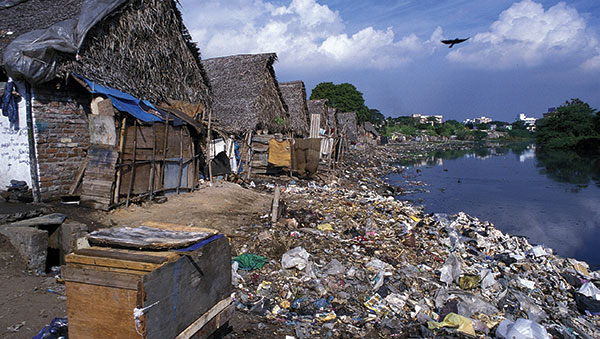
Over the past years India has been booming. The population is growing, the cities are urbanizing, and they are moving away from an agricultural economy to a service based one. India's consumption is rising due to this shift, creating one of the worst cases of municipal solid waste on the streets and in the water ever. Every year 55 million tonnes of municipal solid waste and 38 billion liters of sewage is generated. It is estimated that their waste per capital will increase by 33% annually. One effort to reduce these numbers is Waste to Energy, an approach that takes organic municipal waste and turns it into energy through thermal, biochemical, thermochemical, and electrochemical conversion. Creating fuel this way could also decrease dependence on fossil fuels. Although the idea of turning waste into energy can kill two birds with one stone, the technology needed is more expensive than other waste reduction methods (implementing and enforcing better waste separation systems) and this method only works for organic municipal waste. However, if this technology can advance, it has the potential to turn industrial waste into energy as well.

Quote:
"These measures would reduce the quantity of wastes, generate a substantial quantity of energy from them, and greatly reduce pollution of water and air, thereby offering a number of social and economic benefits that cannot easily be quantified."
Personal Thinking:
I hope this technology can advance. It is an amazing idea to make energy from our trash. Although I'm sure this process is more complicated and the benefits may not be everything it was made out to be, I feel that this kind of innovation is needed to advance. India's waste problem over the years is truly horrifying. Their urbanization has certainly benefited their economy, but not their environment. I'm sure their culture is moving towards a more sustainable one after this crisis.
Citation:
"India Waste to Energy." Energy Alternatives India. ESI, n.d. Web. 27 Sept.
2013. <http://www.eai.in/ref/ae/wte/wte.html>.
Over the past years India has been booming. The population is growing, the cities are urbanizing, and they are moving away from an agricultural economy to a service based one. India's consumption is rising due to this shift, creating one of the worst cases of municipal solid waste on the streets and in the water ever. Every year 55 million tonnes of municipal solid waste and 38 billion liters of sewage is generated. It is estimated that their waste per capital will increase by 33% annually. One effort to reduce these numbers is Waste to Energy, an approach that takes organic municipal waste and turns it into energy through thermal, biochemical, thermochemical, and electrochemical conversion. Creating fuel this way could also decrease dependence on fossil fuels. Although the idea of turning waste into energy can kill two birds with one stone, the technology needed is more expensive than other waste reduction methods (implementing and enforcing better waste separation systems) and this method only works for organic municipal waste. However, if this technology can advance, it has the potential to turn industrial waste into energy as well.
Quote:
"These measures would reduce the quantity of wastes, generate a substantial quantity of energy from them, and greatly reduce pollution of water and air, thereby offering a number of social and economic benefits that cannot easily be quantified."
Personal Thinking:
I hope this technology can advance. It is an amazing idea to make energy from our trash. Although I'm sure this process is more complicated and the benefits may not be everything it was made out to be, I feel that this kind of innovation is needed to advance. India's waste problem over the years is truly horrifying. Their urbanization has certainly benefited their economy, but not their environment. I'm sure their culture is moving towards a more sustainable one after this crisis.
Citation:
"India Waste to Energy." Energy Alternatives India. ESI, n.d. Web. 27 Sept.
2013. <http://www.eai.in/ref/ae/wte/wte.html>.
Sunday, September 22, 2013
9/18 Exploring Global Issues Ch.1 Global Issues
Summary:
The modern world is connected through the influences of culture, media, technology, and globalization. People share cultures, they communicate through media and technology, and they create business partnerships for economic globalization. All these factors have brought our interconnected world closer than ever before.
On the downside, because of the world's synergistic quality, issues are also globalized. Global issues such as governance, consumption, economics, and poverty effect more than a single population, it effects the world. There is a balance between Earth's global issues, which means that if one issue goes astray then every other issue will be thrown off balance as well. People recognize global issues first through specific events, next they make patterns out of similar events, then they identify the structure of the issue. People use systems thinking to understand global issues, which means that they consider all parts of a connected system in their perspective.
To understand the world it is important to be aware of the varying worldviews and media literacies across the globe. To have global awareness is to understand differing perspectives and how those perspectives were acessed and influenced.
Quote:
"An ability to appreciate differences in worldview can help increase understanding among different people throughout the world." (p. 18)
Personal Thinking:
I particularly liked this quote because...well, I think it's fun to understand people who are different than me. Generally people gravitate towards people who are similar to themselves, and maybe that is because we are inherently afraid of people who are different than us. However, I think that appreciating and understanding differences can really open one's mind, which is essential to thinking globally. I think understanding different perspectives is important because, regardless of whether we understand it or not, peoples' actions affect one another and if that is understood then maybe we can make decisions that benefit everyone.
It's almost intimidating having to think on a global standard when I am just an individual. However, seeing how closely linked our world is makes it seem easier to impact.
Citation:
The modern world is connected through the influences of culture, media, technology, and globalization. People share cultures, they communicate through media and technology, and they create business partnerships for economic globalization. All these factors have brought our interconnected world closer than ever before.
On the downside, because of the world's synergistic quality, issues are also globalized. Global issues such as governance, consumption, economics, and poverty effect more than a single population, it effects the world. There is a balance between Earth's global issues, which means that if one issue goes astray then every other issue will be thrown off balance as well. People recognize global issues first through specific events, next they make patterns out of similar events, then they identify the structure of the issue. People use systems thinking to understand global issues, which means that they consider all parts of a connected system in their perspective.
To understand the world it is important to be aware of the varying worldviews and media literacies across the globe. To have global awareness is to understand differing perspectives and how those perspectives were acessed and influenced.
Quote:
"An ability to appreciate differences in worldview can help increase understanding among different people throughout the world." (p. 18)
Personal Thinking:
I particularly liked this quote because...well, I think it's fun to understand people who are different than me. Generally people gravitate towards people who are similar to themselves, and maybe that is because we are inherently afraid of people who are different than us. However, I think that appreciating and understanding differences can really open one's mind, which is essential to thinking globally. I think understanding different perspectives is important because, regardless of whether we understand it or not, peoples' actions affect one another and if that is understood then maybe we can make decisions that benefit everyone.
It's almost intimidating having to think on a global standard when I am just an individual. However, seeing how closely linked our world is makes it seem easier to impact.
Citation:
Skelton, Laura, et al. Exploring Global Issues: Social, Economic, and
Environmental Interconnections. Seattle: Facing the Future, 2013. Print.
Wednesday, September 18, 2013
Waste Labels
Here is our current plan for the new signs:
Hallways
20 copies (11" x 17") each of Recycle, Redeem, and Landfill
Classrooms
80 copies (8" x 11") each of Recycle, Redeem, and Landfill
Cafeteria
8 copies (8" x 11") each of Liquid, Trays, and Compost
8 copies (11" x 17") each of Recycle, Redeem, Landfill, Liquid, Trays, and Compost
There is a total of 372 signs.


Hallways
20 copies (11" x 17") each of Recycle, Redeem, and Landfill
Classrooms
80 copies (8" x 11") each of Recycle, Redeem, and Landfill
Cafeteria
8 copies (8" x 11") each of Liquid, Trays, and Compost
8 copies (11" x 17") each of Recycle, Redeem, Landfill, Liquid, Trays, and Compost
There is a total of 372 signs.


Subscribe to:
Posts (Atom)